

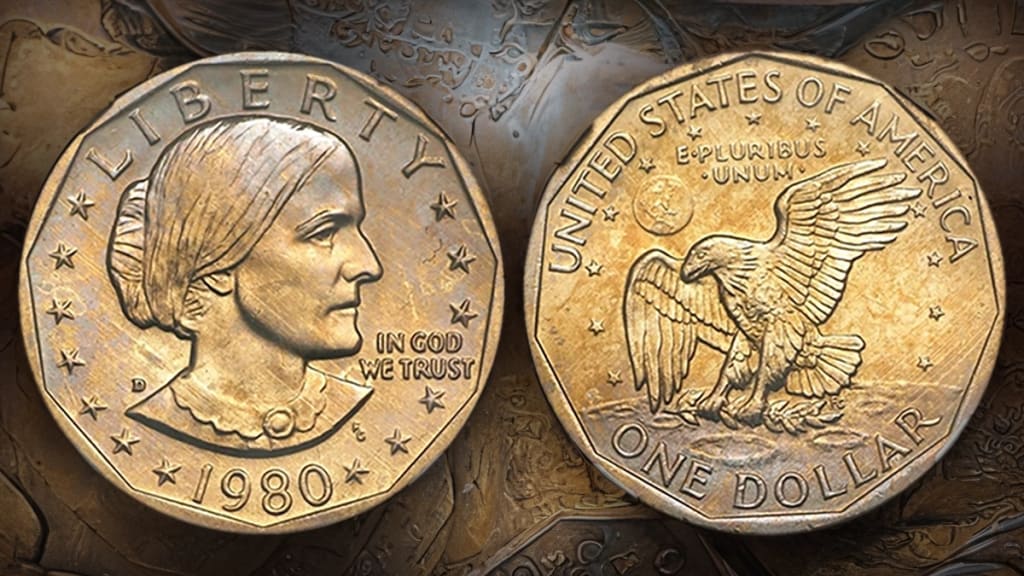
Susan B. Anthony Dollar: A Coin That Carried a Movement
The Susan B. Anthony dollar remains one of the most historically significant coins ever issued by the United States, symbolizing both a milestone in American currency and the long struggle for women’s rights. First released in 1979, the coin was the first U.S. currency to feature a real woman rather than a symbolic figure, honoring Susan B. Anthony, a leading activist in the women’s suffrage movement.
Susan B. Anthony dedicated her life to fighting for equality, most notably the right of women to vote. Although she did not live to see the passage of the 19th Amendment in 1920, her efforts laid critical groundwork for its success. By placing her portrait on the dollar coin, the U.S. government acknowledged her lasting impact on American democracy.
Despite its historical importance, the Susan B. Anthony dollar faced practical challenges from the start. Its size and color were similar to the quarter, causing confusion among the public and leading to frustration in everyday transactions. As a result, the coin never gained widespread acceptance, and production for general circulation was limited to 1979, 1980, and a smaller run in 1981. A final batch was minted in 1999 to meet demand for dollar coins, particularly for use in vending machines and public transportation.
Today, the Susan B. Anthony dollar is no longer commonly used, but it remains popular among collectors and historians. While most versions are worth only their face value, certain minting errors or well-preserved coins can be more valuable. More importantly, the coin’s legacy goes beyond monetary worth.
The Susan B. Anthony dollar paved the way for future efforts to recognize women on U.S. currency. It directly influenced later designs, including the Sacagawea dollar and the American Women Quarters Program, which continues to highlight influential women from diverse backgrounds.
In recent years, renewed conversations about representation and equality have brought fresh attention to the Susan B. Anthony dollar. Educators often use it as a teaching tool to connect history, civics, and economics, while museums display it as a symbol of progress and perseverance.
Though short-lived in circulation, the Susan B. Anthony dollar stands as a reminder that money can carry meaning beyond commerce. It reflects a nation’s values, honors those who shaped its history, and preserves the stories of individuals who fought to expand rights and opportunities for all Americans.