Free Shipping On All Orders Over $250

10 Rare Coins Expected To Soar in Value in the Next Five Years

Although it’s often referred to as the “Hobby of Kings,” coin collecting doesn’t discriminate between the rich and the poor (or between the regal and the common folk). While buying known rare coins can be a costly venture, you can start collecting for little to no money.

And you don’t need to be of a certain age to take up the hobby. In fact, according to the American Numismatic Association, “Interest in coin collecting has exploded over the last year or two, and many more young collectors are starting to enter the picture.”

The chances of finding a million dollar coin in your pocket is extremely rare, but it’s still worth your while to check attics and antique shops, with collectors and dealers or through buying coin rolls from the bank for coins still in circulation. Acquiring the increasingly valuable vintage coins listed here will either come from a lucky find or at an auction and only if you have millions to bid.

Here are 10 rare coins, including five still in circulation, that are certain to increase in value in the next five years.

1943 Lincoln Head Copper Penny

  • Still in Circulation: Yes
  • Approximate Value: $240,000 to $336,000

A news release from the U.S. Mint in 1999 estimated that 40 copper-alloy cents were thought to exist, but it’s thought that number is closer to 20. In 1943, copper and nickel were needed for the Allied war effort, so most pennies from this era were struck in zinc-coated steel. However, a copper batch was released and can fetch between $240,000 and $336,000, according to CoinWeek.

For You: 3 Valuable Coins To Keep an Eye Out for in 2025

1794 Flowing Hair Dollar

  • Still in Circulation: No
  • Approximate Value: $10 million

Demand for the more common 1795 Silver Dollar keeps prices high, but the first silver dollar struck by the U.S. mint one year earlier is one of the rarest and most valuable of all U.S. coins, period. This “national treasure” sold for more than $10 million in 2013.

1969-S Lincoln Cent With Doubled Die Obverse

  • Still in Circulation: Yes
  • Approximate Value:$126,500

Worth upwards of $126,500 in near-perfect condition, according to Invaluable, there are less than 100 known examples of this Lincoln penny, and less than 40 have been authenticated. As such, any discovery of a 1969-S Doubled Die Obverse cent is big news in the coin hobby.

1913 Liberty Head Nickel

  • Still in Circulation: No
  • Approximate Value:$1.4 million

The coin is considered the holy grail of numismatic collectors because it was created in Philadelphia without the approval of the U.S. Mint and are as rare as hen’s teeth. Only Buffalo nickels were meant to be produced in 1913, but apparently five Liberty designs made them through. If, for some reason, you find a sixth that can be authenticated, you’ll be a new millionaire.

1982 No Mint Mark Roosevelt Dime

  • Still in Circulation: Yes
  • Approximate Value: $30 to $300

Mint marks are letters on coins that identify where they were made (“P” for Philadelphia, “D” for Denver, etc.), but this 1982 dime is missing a mint mark. Not significantly valuable, they are still worth way more than its face value ($30 to $300, depending on condition, per CoinWeek).

1927-D St. Gaudens Double Eagle

  • Still in Circulation: No
  • Approximate Value:2.5 to 7 million

As Heritage Auctions noted, when President Roosevelt recalled all gold coins in 1933, about 180,000 Double Eagles were in circulation. Today, the 1927-D Double Eagle is considered to be the rarest U.S. gold coin of the 20th century. According to the Professional Coin Grading Services (PCGS), a grade 67 specimen (uncirculated, with only minor imperfections) is worth about 7 million on the open market.

2005-D 5C Speared Bison Jefferson Nickel

  • Still in Circulation:Yes
  • Approx. Value:$150 to $450

Look closely at any 2005 Bison nickels you come across. If you find one with what looks to be a spear through the back of a buffalo, caused by a severe die break when stamping, keep it safe. While not terribly valuable compared to other coins, you should be able to get between $150 to $450 for one in decent condition (one went for $1,265 at an auction in 2010, per Invaluable). This is a good example of a recent coin that will increase in value over the next five years and a perfect starter coin for the burgeoning collector in your life.

1838-O Capped Bust Half Dollar

  • Still in Circulation: No
  • Approximate Value:$350,000 to $630,000

One of the first coins produced at the newly established New Orleans Mint, only about 20 of these coins were ever made because the new Mint experienced numerous mechanical breakdowns. According to USA Coin Book, 1838-O half dollars were actually produced in early 1839 using the old die, which is why so few of them were produced and known to exist today. They are worth hundreds of thousands if you’re lucky enough to find or inherit one.

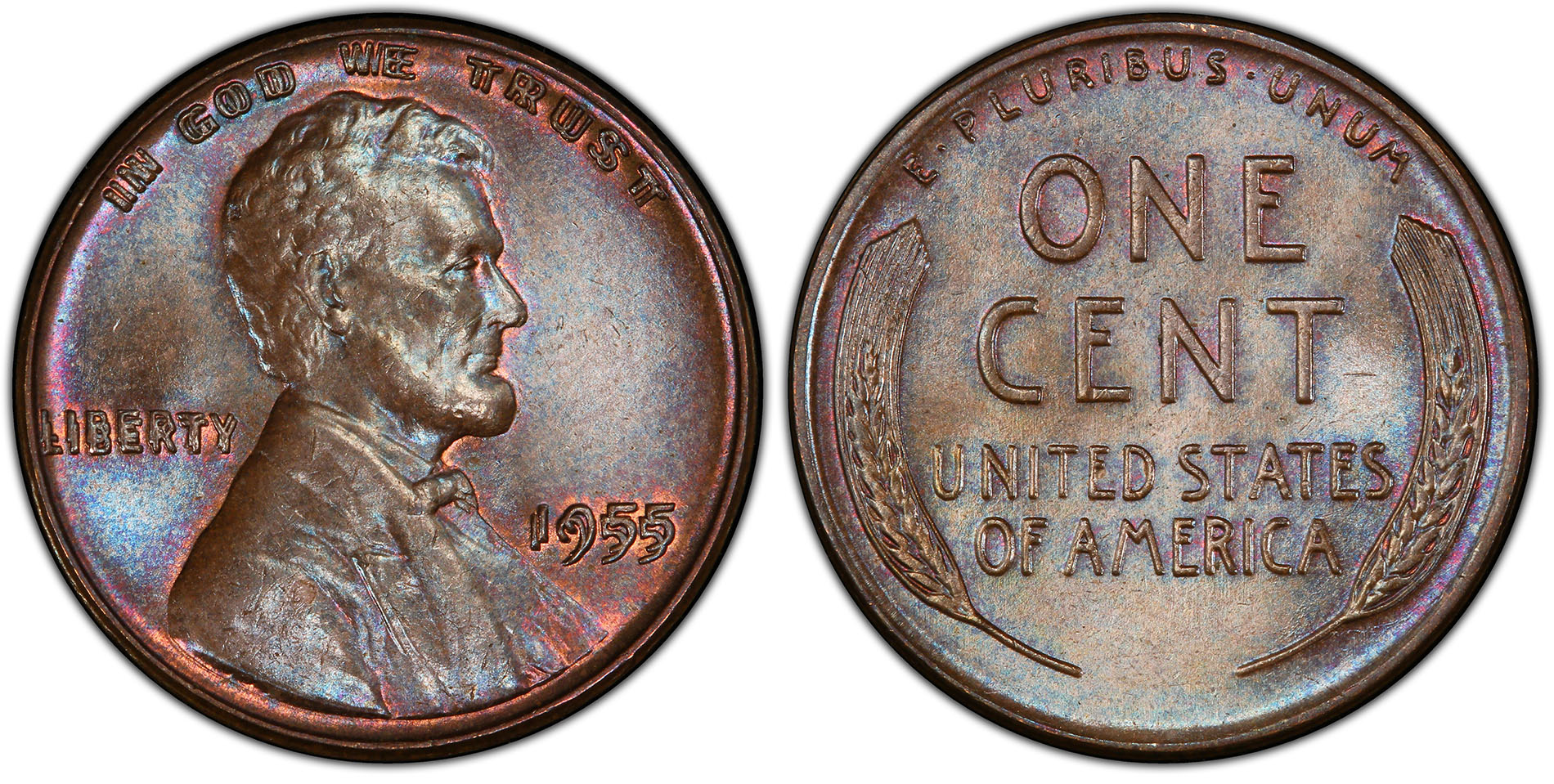
1955 Doubled Die Penny

  • Still in Circulation: Yes
  • Approximate Value: $1,800

Most of these double dies (basically a misaligned striking of a coin, resulting in a duplicate image) from 1955 were distributed as change from cigarette vending machines. Doubling on the numbers and letters mean these are worth around $1,800 a piece.

1873-CC Liberty Seated Dime

  • Still in Circulation: No
  • Approximate Value: $1.8 Million

Last sold for $1,880,000 at auction in August 2012, this unique “No Arrows” dime from a Carson City (CC) mint is the only specimen of its kind. As with many of these coins, the story behind their creation and ownership history are worth reading.

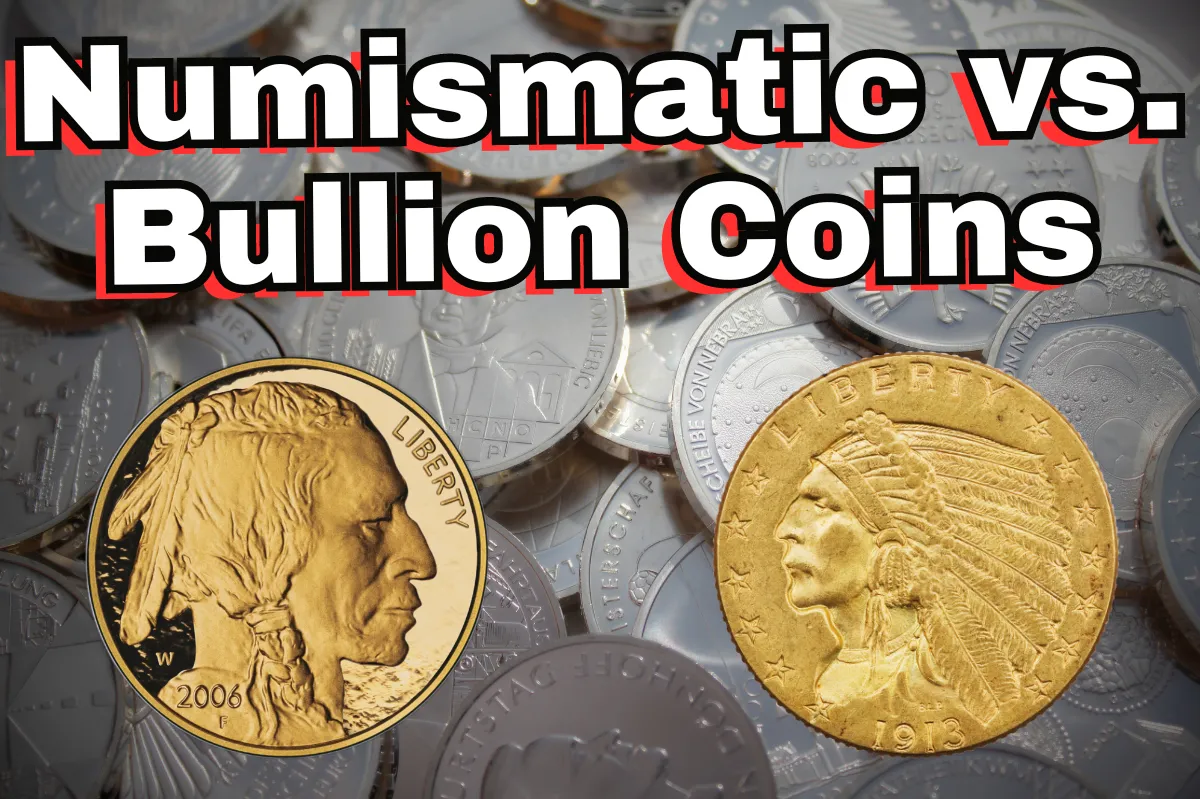
Numismatic vs. Bullion Coins | Understanding The Differences

You’re looking to expand your knowledge of coin collecting, but you are bumping up against some terms you aren’t quite familiar with. Specifically, you’re wondering about numismatic vs. bullion coins. What is the difference, and how will it affect your collection and investments?

Today we’re demystifying these two. Discover the distinct features, investment potential, and historical context of each, paving the way for you to make informed decisions that resonate with both your passion and financial goals.

Understanding Coins

When we dive into the world of coins, we find two main types that catch the interest of collectors and investors alike: numismatic coins and bullion coins. Each type holds its unique appeal and value shaped by different factors.

Numismatic coins are treasures from the past. They tell stories of ancient civilizations, forgotten empires, and pivotal moments in history. What makes these coins valuable is not just the material they’re made of but their rarity, condition, and the historical significance they carry.

Collectors prize these coins for their connection to history and culture, often willing to pay high prices for coins that are rare or in exceptional condition.

On the other hand, we have bullion coins. These coins are known for their purity and the amount of precious metal they contain, such as gold, silver, or platinum.

Unlike numismatic coins, the value of bullion coins is closely tied to the current market price of these metals. They are a favorite among investors who look to precious metals as a way to protect their wealth against inflation or economic downturns.

Get Our Free
IRA/401(k)
Investor’s Guide

On the other hand, we have bullion coins. These coins are known for their purity and the amount of precious metal they contain, such as gold, silver, or platinum.

Unlike numismatic coins, the value of bullion coins is closely tied to the current market price of these metals. They are a favorite among investors who look to precious metals as a way to protect their wealth against inflation or economic downturns.

Bullion coins are typically minted by governments and come with a guarantee of their weight and purity.

The production of these coins is a meticulous process. For numismatic coins, it’s often about preserving the details of their design, which can tell us a lot about the time and place they come from.

Bullion coins, however, are produced with a focus on ensuring the precise content of precious metal, reflecting their role as a stable investment.

The Allure of Coin Collection

The world of coin collection is rich and diverse, offering something for everyone. At the heart of this hobby is the deep connection collectors feel to the coins they acquire.

Numismatic coins, with their rich histories and unique stories, offer a window into the past. Collecting these pieces is like holding a piece of history in your hands.

It’s not just about the physical coin but the journey it has been on and the stories it could tell. This emotional connection is what draws many to numismatic collecting. Each coin is a treasure, valued not only for its material but for the historical narratives and artistic craftsmanship it represents.

Bullion coins, on the other hand, appeal to those with an eye on the present and future. These coins are prized for their purity and the precious metals they contain. Collectors and investors alike are drawn to bullion coins as a tangible investment.

They offer a sense of security, acting as a hedge against economic uncertainties. Unlike numismatic coins, the value of bullion coins fluctuates with the market price of metals like gold, silver, and platinum. This makes them an attractive option for those looking to invest in physical assets that can withstand the test of time.

Investment Potential 

Numismatic coins are a fascinating area for investment. Their value is determined by more than just the metal they contain; rarity, condition, and historical significance all play crucial roles.

A coin from a limited minting that once belonged to a historical figure, for example, could fetch an impressive sum. The market for these coins is driven by demand, with collectors often willing to pay a premium for pieces that complete or enhance their collections.

However, investing in numismatic coins requires a deep understanding of the market. The rarity and condition of a coin can significantly affect its value. A rare coin in poor condition might not fetch as much as a more common coin in excellent condition.

Similarly, historical significance can add to a coin’s allure and value, making some coins highly sought after by collectors.

Bullion Coins

Bullion coins, by contrast, offer a more straightforward investment proposition. Their value is directly tied to the precious metal they contain, making them subject to fluctuations in the global markets for these metals.

For investors, bullion coins offer tangible assets that can serve as a hedge against inflation and currency devaluation. Gold, silver, and platinum are all popular choices, with their prices influenced by economic indicators, geopolitical stability, and supply and demand dynamics.

The appeal of bullion coins as an investment lies in their liquidity and the stability of precious metals as an asset class. Unlike numismatic coins, the investment value of bullion coins is easier to quantify, making them a suitable option for those new to coin investing.

Additionally, bullion coins are often produced in larger quantities, making them more readily available and easier to trade.

 
Investment Stability and Potential Returns

When comparing the investment stability and potential returns of numismatic and bullion coins, it’s clear that each offers distinct advantages and challenges.

Numismatic coins can yield high returns, especially for rare and historically significant pieces. However, their market is more specialized, and values can be more volatile, influenced by trends in collecting and the availability of specific coins.

No products to display

Bullion coins, on the other hand, offer more stability. Their value is anchored in the price of precious metals, which tends to be more predictable over the long term.

While they may not offer the excitement of discovering a rare numismatic gem, bullion coins are a solid choice for those looking to preserve wealth and protect against economic uncertainties.

Coin Production and Minting Processes

The journey of a coin from concept to collector’s item is fascinating and involves meticulous processes, whether it’s a numismatic treasure or a bullion piece. Understanding how coins are made can give collectors and investors deeper insight into their value and the reasons behind it.

Coins are minted, which means they are produced by official government mints or authorized private entities. The process begins with the design, which is carefully chosen to reflect historical significance, cultural values, or economic importance.

For numismatic coins, the design is especially crucial because it often commemorates a specific event, person, or period in history. These coins are minted in limited quantities, which adds to their rarity and potential value. The minting process for numismatic coins also emphasizes precision and detail, ensuring that each coin is a work of art.

Bullion coins, while also beautifully designed, are produced with a different focus in mind. Their primary value comes from the precious metals they contain. As a result, the minting process ensures the purity and weight of the metal meet strict standards.

These coins are usually minted in larger quantities than numismatic coins, making them more accessible to investors. Governments often guarantee the weight and purity of bullion coins, providing investors with confidence in their physical gold, silver, or platinum investments.

The production volume of these coins plays a significant role in their market. Numismatic coins’ value is boosted by their scarcity, while bullion coins’ value is more directly tied to the current market prices of precious metals.

However, both types of coins undergo rigorous quality checks and are crafted with a high level of expertise.

Resale Value and Market Dynamics

Numismatic coins are prized for their historical significance, rarity, and condition. These coins often have a resale value that can significantly exceed their face value or the value of the metals they contain.

The market for numismatic coins can be influenced by a variety of factors, including the coin’s age, its historical context, and its rarity. For instance, a coin from a limited minting that was part of a pivotal moment in history can attract high interest from collectors, driving up its price.

Condition also plays a crucial role in a numismatic coin’s value. Well-preserved coins, with clear details and minimal wear, are more desirable and command higher prices.

Collectors often refer to professional grading services to determine a coin’s condition, which is then used to gauge its market value. The provenance of a numismatic coin, or its history of ownership, can also add to its allure and value, especially if it was previously part of a renowned collection.

Precious Metal Markets

The resale value of bullion coins is more straightforward, primarily determined by the current market prices of the precious metals they contain.

Gold, silver,and platinum markets fluctuate based on global economic conditions, demand for industrial and jewelry use, and investor sentiment. Bullion coins, therefore, serve as a liquid investment, easily converted into cash based on the prevailing metal prices.

However, even within the bullion market, certain coins can fetch a premium over their metal content due to their design, minting quality, or the reputation of their issuing mint. For example, bullion coins issued in limited editions or featuring commemorative designs can become collectible over time, blending the lines between bullion and numismatic value.

Strategies to Maximize Resale Value

To maximize the resale value of their coins, collectors and investors need to stay informed about market trends and maintain the condition of their coins. For numismatic coins, this means proper storage and handling to preserve their condition and, by extension, their value.

For bullion coins, timing the sale to coincide with high metal prices can lead to better returns. Additionally, building a diverse collection can help mitigate risks associated with market fluctuations, ensuring that the overall value of the collection remains stable or grows over time.

Challenges and Considerations

Collecting and investing in coins, whether numismatic or bullion, comes with its own set of challenges and considerations. Navigating these can be key to building a valuable and satisfying collection.

One major challenge in the world of numismatic coins is determining authenticity and condition. With older and rarer coins, there’s always a risk of counterfeits. To protect against this, collectors often rely on reputable dealers or third-party grading services, which can authenticate and grade coins.

This grading process assesses a coin’s condition on a scale, and a higher grade can significantly increase a coin’s value. However, getting a coin graded involves additional costs and the risk that the coin might not grade as highly as expected.

For bullion coin investors, market timing and liquidity are important considerations. Precious metal pricesfluctuate due to various global economic factors. Buying when prices are low and selling when they are high sounds simple, but it requires knowledge of market trends and sometimes a bit of luck.

Additionally, while bullion coins are generally liquid assets, market conditions can affect how quickly and profitably you can convert your coins to cash.

Diversification is another strategy that both numismatic collectors and bullion investors should consider. Just as with other types of investments, putting all your money into one type of coin or metal can be risky. 

Enhancing Your Collection

Building a coin collection that is both personally satisfying and potentially profitable requires strategy, knowledge, and connections. Whether you’re drawn to the historical allure of numismatic coins or the tangible value of bullion, certain practices can help you enhance your collection and safeguard its value.

A solid foundation of knowledge is crucial for any collector or investor. Understanding the history, rarity, and market value of coins can help you make informed decisions.

This means doing your homework-reading books, attending seminars, and following market trends online. Joining coin-collecting forums and societies can also provide valuable insights and access to a community of like-minded enthusiasts. 

Building Relationships 

Establishing relationships with trusted coin dealers and auction houses can provide several advantages. These professionals can offer expert advice, authenticate coins, and alert you to new opportunities.

They can also help you sell your coins when the time comes. When choosing dealers or auction houses to work with, look for those with established reputations and positive reviews from other collectors.


Varieties vs Mint Errors: What’s the Difference?

Are mint errors and varieties the same thing? What’s the difference between the two? Mint errors are mistakes that happen during the manufacturing process. Varieties come from variations in the different dies used to strike the coins.

Mint Errors

Let’s start with mint errors. What are they anyway? A mint error is a mistake that happens during the manufacturing process. They are impediments or imperfections in the minting or striking process that impact the appearance of the coin. Since these are made by mistake, each error is unique, and no two will look exactly the same.

PCGS certifies most of the common mint errors but we do not certify any error coins that appear to be human-made instead of mint-made.

Here are a few of the common mint errors PCGS will grade:

Rotated Dies – This error occurs when one of the coin dies rotates leaving the front and back of the coin unaligned. PCGS will only grade coins with a die rotation of 20 degrees or more.

Mules – This error occurs when a coin is struck by mismatched dies. This means that the front of one coin is paired with the back of another or vice versa. The planchet used will tell you what denomination the coin was supposed to be. If the mule has a Lincoln Cent front and Roosevelt Dime back but was struck on a copper planchet, the coin was supposed to be a Lincoln Cent.

Brockages – This error occurs when a coin is struck with another coin. This happens when a coin gets stuck to the die and strikes the next planchet. This leaves the new planchet with an incuse mirror image of the design.

Broadstrikes – This error occurs when a coin is struck outside of its collar. The collar is the retaining ring in which a coin is struck, keeping it the correct diameter upon strike. When a coin is broadstruck, it expands beyond that ring or is struck without the retaining collar present, making the coin larger than intended.

Off-Center Strikes – This error occurs when a planchet is not perfectly placed between the two dies and is struck off-center. These coins are unusually shaped and are always missing part of the design. The off-center percentage is determined by how much of the blank planchet is visible. For example, if you can see 40% of the planchet, the coin is 40% off-center.

Wrong Planchets – A wrong planchet error occurs when a coin is struck on a planchet meant for a different coin. For example, an Eisenhower Dollar struck on a Kennedy Half Dollar planchet.

Varieties

Varieties are variations or slight differences in the different coin dies. They are often less obvious than mint errors and may include differently shaped mintmarks, different-sized dates, or missing elements – for example, the missing buffalo leg on the 1937 3-Legged Buffalo Nickel. Another very popular kind of variety is none other than the doubled die!

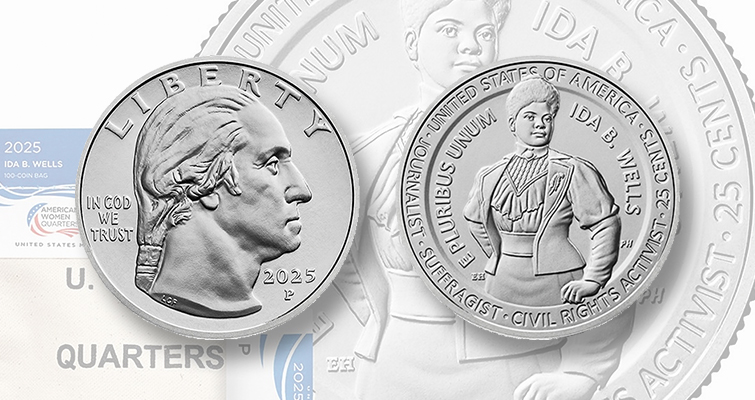
First 2025 quarter dollars available in bags and roll sets

Bags and rolls containing Uncirculated 2025-P and 2025-D American Women, Ida B. Wells quarter dollars went on public sale by the United States Mint at noon Eastern Time Feb. 4.

Ida B. Wells was a prolific educator, investigative journalist, suffragist, and civil rights activist. She fought for justice and equality throughout her life and used her powerful voice to expose violence against African Americans in the late 19th and early 20th centuries.

The coins are offered in 100-coin mini-canvas bags from either the Denver Mint or the Philadelphia Mint; a two-roll set of 40 coins per roll from each of the two production facilities; and a three-roll set additionally including a 40-coin roll of Uncirculated San Francisco Mint quarter dollars.

U.S. Mint customers could register and place advance orders for the numismatic products through the bureau’s subscription option.

A limit of 8,250 bags each from the Denver and Philadelphia Mints were available, priced at $47.25 each.  Bags in 2024 were priced at $45.

The two-roll sets, limited to 7,000 sets, were priced at $42, up from $40 in 2024.

The three-roll set, limited to a release of 18,625 sets, was priced at $63, up from $60 in 2024.

Most of the three-roll sets available were ordered by subscription, although the U.S. Mint set aside an undisclosed number to be available for the Feb. 4 sales opening.

First-day orders were restricted to 10 each of the 100-coin bags and three each of the two-roll and three-roll sets. After the first day, restrictions were lifted.

First day sales by option totaled
* 100-coin 2025-P bags, 1,215.
* 100-coin 2025-D bags, 1,015
* Two-roll sets, 2,165.
* Three-roll-sets, 9,230.

Opportunity to Apply for Appointment to the Citizens Coinage Advisory Board

The U.S. Mint is seeking applicants for appointment as a member representing the interests of the general public.

The United States Mint is seeking applicants for appointment to the Citizens Coinage Advisory Committee (CCAC) as a member representing the interests of the general public. The deadline to email submissions is no later than 5 p.m. (ET) on Friday, October 18, 2024. The United States Mint will review all applications and forward recommendations to the Secretary of the Treasury for consideration.

The CCAC is composed of 11 members — one specially qualified in numismatic collection curation; one specially qualified in the medallic arts or sculpture; one specially qualified in American history; one specially qualified in numismatics; three individuals appointed to represent the interests of the general public; and four individuals recommended by the Leadership of both the United States House of Representatives and the United States Senate.

Members are appointed for a four-year term. No individual may be appointed to the CCAC while serving as an officer or employee of the Federal Government, and all applicants must be United States citizens. CCAC members are Special Government Employees and are, therefore, subject to various applicable conflict of interest laws and ethics regulations.

Individuals wishing to be considered for appointment to the CCAC should submit a resume or curriculum vitae along with a cover letter describing their reasons for seeking appointment and detailing their specific skills, talents, and experience by email to info@ccac.gov, Attn: Jennifer Warren. The deadline to email submissions is no later than 5 p.m. (ET) on Friday, October 18, 2024.

The United States Mint is interested in candidates who have demonstrated interest in and a commitment to actively participating in meetings and activities, and a demonstrated understanding of the role of the CCAC and the obligations of a Special Government Employee; possess a demonstrated desire for public service and have a history of honorable professional and personal conduct, as well as successful standing in their communities; and are free of professional, political, or financial interests that could negatively affect their ability to provide impartial advice.

About the CCAC

The CCAC was established by an Act of Congress in 2003. It advises the Secretary of the Treasury on theme or design proposals for circulating coinage, bullion coinage, Congressional Gold Medals, and other medals produced by the United States Mint. The CCAC also makes commemorative coin recommendations to the Secretary and advises on the events, persons, or places to be commemorated, the mintage levels, and proposed designs.

The CCAC is subject to the authority of the Secretary of the Treasury. The United States Mint is responsible for providing necessary and appropriate administrative support, technical services, and advice.

The CCAC submits an annual report to Congress and the Secretary of the Treasury, describing its activities and providing recommendations.

Visit the website for additional information about the Citizens Coinage Advisory Committee.

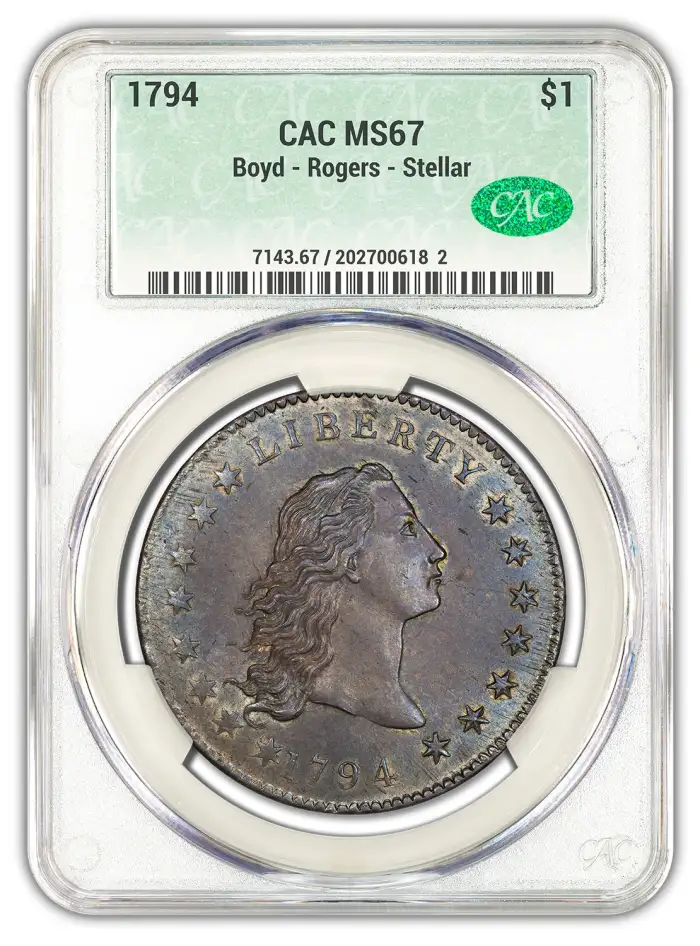
Declared Finest Known, 1794 Dollar is Now Graded CACG MS67 And Insured For $15 Million

A 1794 Flowing Hair silver dollar, sold at auction “raw” as Gem Brilliant Uncirculated by Stack’s in 1995, has now been closely examined by experts at CAC Grading, who certified it as Mint State 67.

According to CACG, it is the finest known surviving example from the first year the United States Mint struck dollar coins for circulation. Now insured for $15 million by its long-time owner, the coin may make its first public appearance in 30 years in 2025.

In 2010, the coin was graded by PCGS as MS66+ and later given a CAC sticker of approval.

“I’ve been kicking myself ever since it received only a green CAC approval sticker rather than a gold sticker.I can certainly understand an eight-figure valuation in this market,” said Albanese.

Its pedigree dates back to the 1920s with famous collector Col. E.H.R. Green and later mid-century legendary type set collector Lelan Rogers. The 1794 dollar was purchased at the 1995 auction by dealer Jay Parrino for $577,500. Parrino and his partner Mike Phillips sold it in 1996 to dealer Chris Napolitano for his client, a collector in Georgia who still owns it and wants to remain anonymous under the set registry name “Stellar.”

“The Lelan Rogers 1794 dollar is the absolute best 1794 dollar; the best 1794 dollar in existence,” stated Phillips.

The coin was recently submitted to CAC for crossover, where a coin is removed from another third-party certification service’s sealed holder, examined, and, if appropriate, certified and encapsulated by another service.

Napolitano said his customer “was certainly happy about the results” and had expected CAC to grade the coin MS67.

“It validated what he felt about the dollar over all these years. Since I first saw this coin at Stack’s in 1995, I felt it was one of the most important U.S. coins in existence. In fact, at the time, I said that if I could own only one U.S. coin, this would be the one. That still holds true today,” Napolitano stated.

“My client has never publicly displayed the coin during the nearly 30 years he has owned it. We know there’s a whole generation of numismatists who have never had the opportunity to view the coin. In fact, many may not be aware of its existence at all. We don’t have any specific dates or venues to announce at this time, but we will discuss the possibility of displaying the coin in the future,” he revealed.

The 1995 Stack’s auction description of the coin stated:

“1794 Bolender 1. Gem Brilliant Uncirculated. 416.1 grains. A gorgeous toned satin gem coin. Both sides are toned a lovely, deep coin silver gray with iridescent champagne and palest iridescent blue around the rims. The fields are fully lustrous and satiny, the frost virtually unmarred by signs of handling. One has to wonder how such a big and heavy coin could have survived for 200 years with such satiny surfaces intact.”

According to U.S. Mint records, Chief Coiner Henry Voigt delivered a total of 1,758 silver dollars to Mint Director David Rittenhouse on October 15, 1794. That was the total mintage of 1794-dated Flowing Hair dollars released for the year.

“Less than 150 1794 silver dollars are known to exist today, and only a handful are certified mint state. The Lelan Rogers coin owned for decades by a Georgia collector and now graded CACG MS67 is the finest known,” said CAC Grading President Ron Drzewucki.

Several leading early American federal coinage experts, including Joe O’Connor, who spoke with CAC Grading about the coin, unanimously agreed.

“When we all first saw the Lelan Rogers 1794 dollar almost thirty years ago, it was clear then that this was not only one of the finest examples of the Flowing Hair Dollar type, but also likely the finest 1794. Three decades later, our collective opinion has not changed,” O’Connor declared.

Albanese and two dozen veteran numismatists founded the Certified Acceptance Corporation (CAC) in 2007 to provide buyers and sellers verification that their coins certified by third-party grading services met stringent standards. In 2022, he and Ron Drzewucki organized over 150 leading members of the numismatic community to expand their mission for accuracy and consistency by creating a new third-party grading and encapsulation service, CAC Grading, launched in 2023.

Investing in Sports Memorabilia vs Stocks and Bonds

Sports memorabilia has long been a popular alternative investment option for those looking to diversify their portfolio beyond traditional stocks and bonds. From autographed jerseys and baseball cards to game-used equipment and championship rings, sports memorabilia can hold significant sentimental and monetary value for collectors. But how does the performance of sports memorabilia as an investment compare to that of stocks and bonds?

To answer this question, we must first define what we mean by “sports memorabilia” and how we measure its value. Sports memorabilia encompasses a wide range of items, including but not limited to autographs, game-used equipment, trading cards, and championship rings. The value of these items is largely determined by factors such as rarity, condition, and historical significance.

One commonly used metric for measuring the performance of sports memorabilia as an investment is the Sports Memorabilia Index, created by PWCC Marketplace. The index tracks the value of a select group of high-end sports memorabilia items, including vintage baseball cards, game-used equipment, and championship rings, and compares their performance to that of the S&P 500 stock index and 10-year US Treasury bonds.

According to the Sports Memorabilia Index, the average annual return for sports memorabilia from 2008 to 2021 was 14.5%. This outperformed the S&P 500, which had an average annual return of 10.9% over the same period, but was slightly below the average annual return of 15.1% for 10-year US Treasury bonds. However, it’s worth noting that the performance of sports memorabilia as an investment can vary widely depending on the specific items being collected and the conditions of the market.

One of the advantages of investing in sports memorabilia is its ability to hold emotional value for collectors in addition to monetary value. Owning a piece of sports history, such as a game-used jersey or autographed ball from a favorite athlete, can provide a sense of connection and nostalgia that traditional financial investments cannot match.

However, the market for sports memorabilia can be highly volatile, with prices fluctuating based on factors such as the popularity of specific athletes and teams, historical events, and trends in the broader collectibles market. This can make it difficult to predict the future performance of sports memorabilia as an investment and requires a certain level of expertise and market knowledge.

In conclusion, sports memorabilia has shown to have the potential to generate strong returns as an alternative investment option, outperforming the stock market in recent years. However, it also comes with its own unique risks and challenges that require careful consideration and research before investing. Ultimately, the decision to invest in sports memorabilia should be based on a careful assessment of an individual’s financial goals, risk tolerance, and personal interests, but make no mistake, it could payout handsomely. 

Reference: ultimateautographs.com

Back to Top
Product has been added to your cart