
Free Shipping On All Orders Over $250

The Most Valuable Coins That Serious Collectors Want

Putting together a collection of the most valuable coins can be a rewarding trip through the history books and a smart investment. Coin collecting is a fun pastime for enthusiasts of all ages, but it can also pad out a portfolio if curated with an eye toward valuable coins that have the potential to increase in value. When creating a collection that will build worth, it helps to understand not only what people are looking for now, but what they may be looking for in the future.

Current Valuable Coins to Look Out For

Coin values can skyrocket for the rarest issues. The most valuable coins are sold primarily at auction, and due to their scarcity, once a specimen sells, another may not be available for decades. When building your collection or taking your collection in a new path, it can be more rewarding to start with more readily available coins that still offer excellent value.

Morgan Dollars 
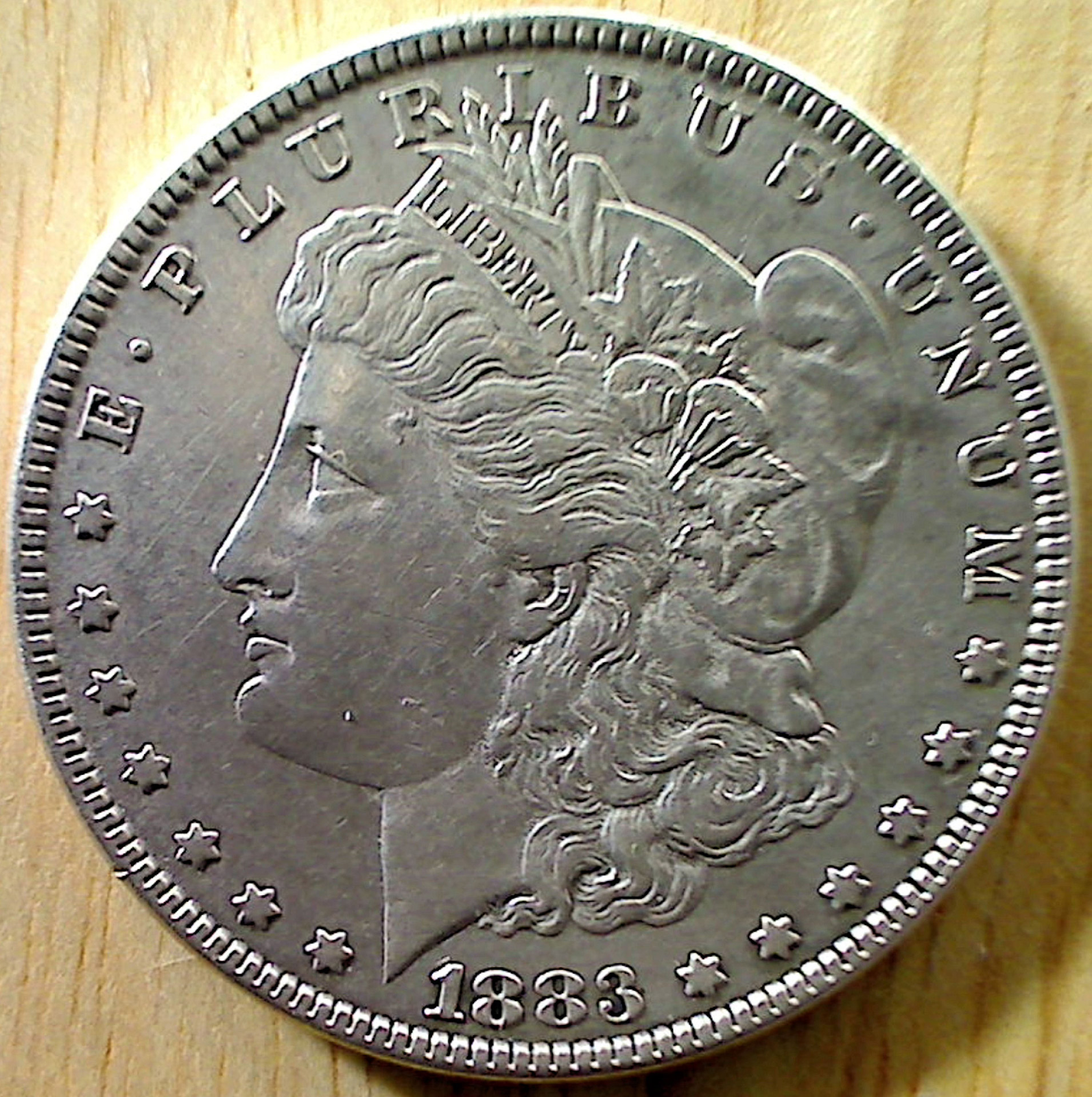
1883 Morgan Silver Dollar, Source: Public Domain Pictures 

One of the most popular United States Coins, the Morgan Dollar was primarily minted from 1878 until 1904, with a single one-off year of production in 1921 to cap off its run before giving way to the Peace Dollar. Struck in 90% silver, these dollars are still sought after for their metal content and even poor examples hold their value as bullion. Along with the more common Denver, San Francisco, and Philadelphia minted coins, this dollar saw some coins struck in Carson City and New Orleans, which are highly collectible.

1873 Seated Liberty Dollars
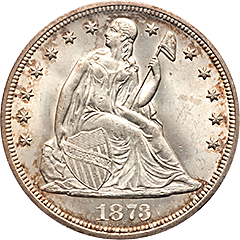
1873 Seated Liberty Dollar, Source: Wikimedia Commons 

Seated Liberty Dollars are some of the most valuable coin specimens on the market, and they’re fairly accessible for collectors looking to get started. These coins were struck in Philadelphia, San Francisco, Carson City, and New Orleans between 1840 and 1873. Production was ended by the Coinage Act of 1873 which both established the gold standard and eliminated the ability for anyone with silver bullion to deliver it to the mint and have it struck into coins.

Saint-Gaudens Double Eagles
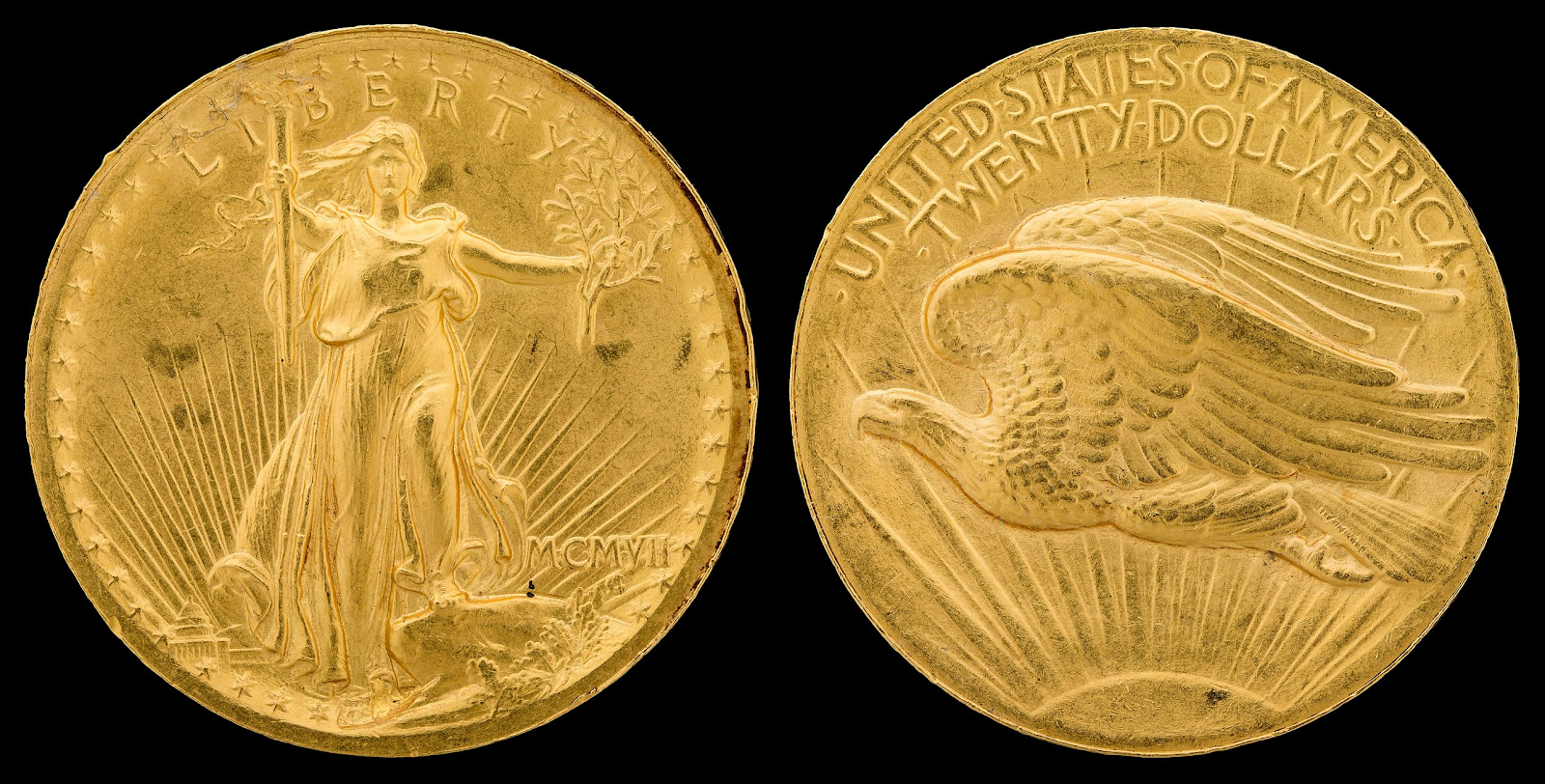
Head and Tail shot of a Saun-Gaudens Double Eagle coin., Source: Wikimedia Commons 

From 1907 until 1933, the United States Mint produced what is widely regarded as the most beautiful coin it ever created and some of the most valuable coins on the collectors market. Designed by Augustus Saint-Gaudens at the invitation of President Teddy Roosevelt, the resulting image was a piece of art that was then cast in 90% gold.

Struck at the Philadelphia, San Francisco, and Denver mints, the coin saw several slight changes throughout its run, giving collectors plenty to chase down if they’re putting together a type collection, but as highly collectible gold coins, they stand on their individual merits just as well.

What Coin Collectors Are Looking For 

W Mint Marks

While most collectors are familiar with the S, D, and P mint marks on everyday coins, watch out for W, which signifies coins struck in West Point’s mint. These coins won’t show up in the change you get at the store but are often seen on bullion and commemorative issues. West Point has also struck some special edition coins for mint sets. Because it is often used by the mint to help encourage interest in coins and collecting, you can’t rule out its potential for additional runs in the future and possibly some strikes meant for circulation.

Bullion 

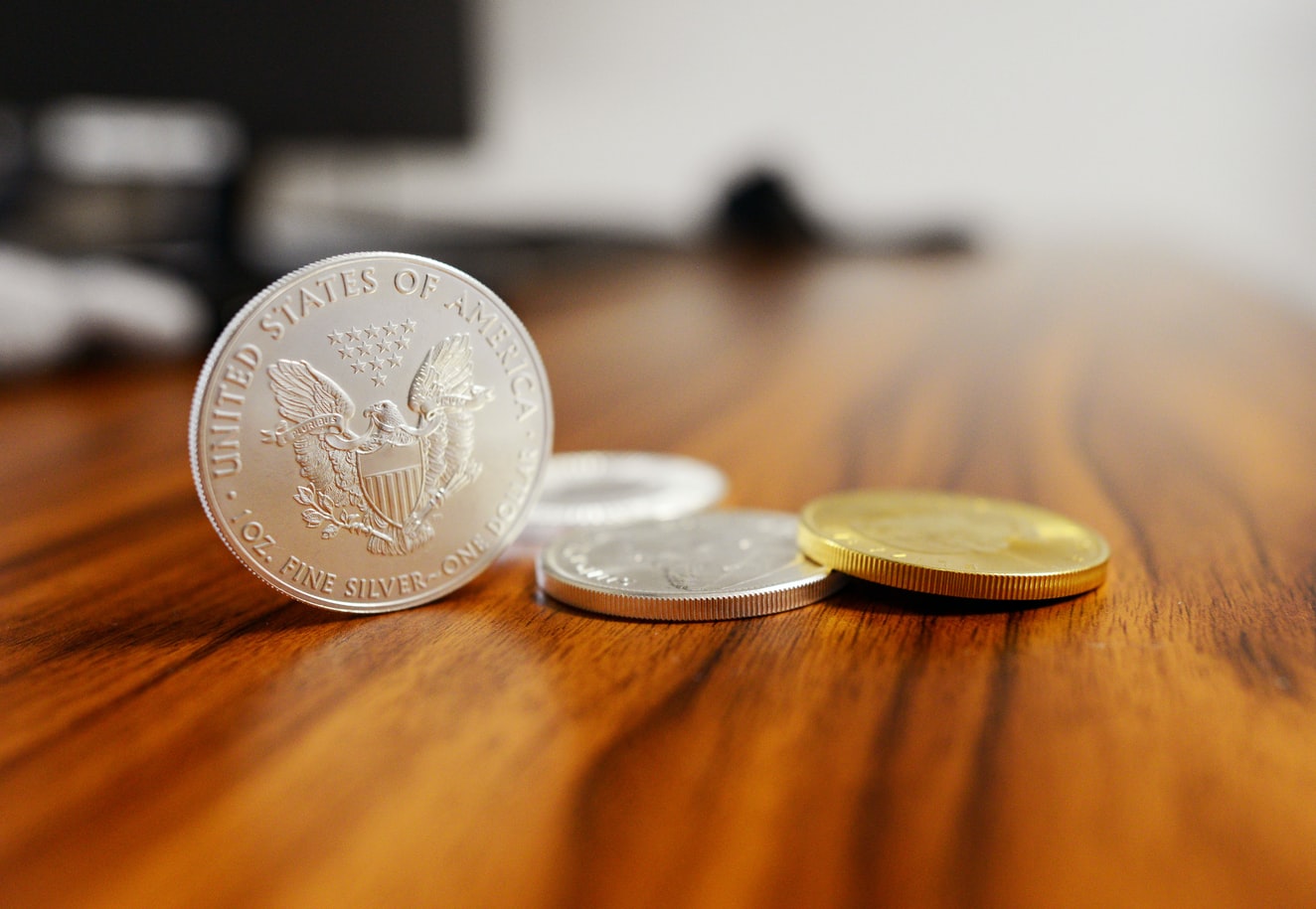
Bullion coins, like the silver and gold American Eagles and Buffalos, are in current production and make beautiful additions to any collection. Bullion strikes have proven popular over the years, and since they’re offered in a set weight of precious metal, there is a floor to their price of that metal’s spot. More importantly, the potential ceiling for these investment-grade coins is incredibly high. 

Errors

Errors are and will remain some of the most valuable coins to collect. With the United States Mint’s stringent quality control guidelines, relatively few make it into circulation. With more limited releases coming in circulation coins, such as the National Parks Washington Quarter, each with its own sets of dies, the opportunity for error to make it into circulation is higher than in any other time in the modern era.

Adding these gems to your collection can be both a rewarding hobby and incredibly lucrative. While you can acquire errors through the secondary market, they can also be found in your pocket change and rolls of coins you can buy at your bank for face value. There’s no risk involved because each coin is worth exactly what you paid for it if your search comes up empty.

Protect Your Valuable Coins

Coin collecting is an iterative passion. Enthusiasts invest significant amounts of time and money to curate their collections, but it can all disappear in a fire, natural disaster, or in the hands of thieves. It’s important to protect the value of your collection so you have the peace of mind to focus on finding the next addition. 
10 Rare Coins Expected To Soar in Value in the Next Five Years

Although it’s often referred to as the “Hobby of Kings,” coin collecting doesn’t discriminate between the rich and the poor (or between the regal and the common folk). While buying known rare coins can be a costly venture, you can start collecting for little to no money.

And you don’t need to be of a certain age to take up the hobby. In fact, according to the American Numismatic Association, “Interest in coin collecting has exploded over the last year or two, and many more young collectors are starting to enter the picture.”

The chances of finding a million dollar coin in your pocket is extremely rare, but it’s still worth your while to check attics and antique shops, with collectors and dealers or through buying coin rolls from the bank for coins still in circulation. Acquiring the increasingly valuable vintage coins listed here will either come from a lucky find or at an auction and only if you have millions to bid.

Here are 10 rare coins, including five still in circulation, that are certain to increase in value in the next five years.

1943 Lincoln Head Copper Penny

  • Still in Circulation: Yes
  • Approximate Value: $240,000 to $336,000

A news release from the U.S. Mint in 1999 estimated that 40 copper-alloy cents were thought to exist, but it’s thought that number is closer to 20. In 1943, copper and nickel were needed for the Allied war effort, so most pennies from this era were struck in zinc-coated steel. However, a copper batch was released and can fetch between $240,000 and $336,000, according to CoinWeek.

For You: 3 Valuable Coins To Keep an Eye Out for in 2025

1794 Flowing Hair Dollar

  • Still in Circulation: No
  • Approximate Value: $10 million

Demand for the more common 1795 Silver Dollar keeps prices high, but the first silver dollar struck by the U.S. mint one year earlier is one of the rarest and most valuable of all U.S. coins, period. This “national treasure” sold for more than $10 million in 2013.

1969-S Lincoln Cent With Doubled Die Obverse

  • Still in Circulation: Yes
  • Approximate Value:$126,500

Worth upwards of $126,500 in near-perfect condition, according to Invaluable, there are less than 100 known examples of this Lincoln penny, and less than 40 have been authenticated. As such, any discovery of a 1969-S Doubled Die Obverse cent is big news in the coin hobby.

1913 Liberty Head Nickel

  • Still in Circulation: No
  • Approximate Value:$1.4 million

The coin is considered the holy grail of numismatic collectors because it was created in Philadelphia without the approval of the U.S. Mint and are as rare as hen’s teeth. Only Buffalo nickels were meant to be produced in 1913, but apparently five Liberty designs made them through. If, for some reason, you find a sixth that can be authenticated, you’ll be a new millionaire.

1982 No Mint Mark Roosevelt Dime

  • Still in Circulation: Yes
  • Approximate Value: $30 to $300

Mint marks are letters on coins that identify where they were made (“P” for Philadelphia, “D” for Denver, etc.), but this 1982 dime is missing a mint mark. Not significantly valuable, they are still worth way more than its face value ($30 to $300, depending on condition, per CoinWeek).

1927-D St. Gaudens Double Eagle

  • Still in Circulation: No
  • Approximate Value:2.5 to 7 million

As Heritage Auctions noted, when President Roosevelt recalled all gold coins in 1933, about 180,000 Double Eagles were in circulation. Today, the 1927-D Double Eagle is considered to be the rarest U.S. gold coin of the 20th century. According to the Professional Coin Grading Services (PCGS), a grade 67 specimen (uncirculated, with only minor imperfections) is worth about 7 million on the open market.

2005-D 5C Speared Bison Jefferson Nickel

  • Still in Circulation:Yes
  • Approx. Value:$150 to $450

Look closely at any 2005 Bison nickels you come across. If you find one with what looks to be a spear through the back of a buffalo, caused by a severe die break when stamping, keep it safe. While not terribly valuable compared to other coins, you should be able to get between $150 to $450 for one in decent condition (one went for $1,265 at an auction in 2010, per Invaluable). This is a good example of a recent coin that will increase in value over the next five years and a perfect starter coin for the burgeoning collector in your life.

1838-O Capped Bust Half Dollar

  • Still in Circulation: No
  • Approximate Value:$350,000 to $630,000

One of the first coins produced at the newly established New Orleans Mint, only about 20 of these coins were ever made because the new Mint experienced numerous mechanical breakdowns. According to USA Coin Book, 1838-O half dollars were actually produced in early 1839 using the old die, which is why so few of them were produced and known to exist today. They are worth hundreds of thousands if you’re lucky enough to find or inherit one.

1955 Doubled Die Penny

  • Still in Circulation: Yes
  • Approximate Value: $1,800

Most of these double dies (basically a misaligned striking of a coin, resulting in a duplicate image) from 1955 were distributed as change from cigarette vending machines. Doubling on the numbers and letters mean these are worth around $1,800 a piece.

1873-CC Liberty Seated Dime

  • Still in Circulation: No
  • Approximate Value: $1.8 Million

Last sold for $1,880,000 at auction in August 2012, this unique “No Arrows” dime from a Carson City (CC) mint is the only specimen of its kind. As with many of these coins, the story behind their creation and ownership history are worth reading.

First 2025 quarter dollars available in bags and roll sets

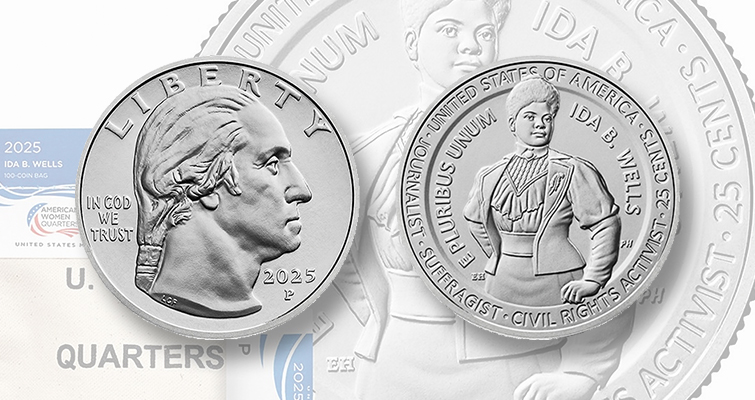
Bags and rolls containing Uncirculated 2025-P and 2025-D American Women, Ida B. Wells quarter dollars went on public sale by the United States Mint at noon Eastern Time Feb. 4.

Ida B. Wells was a prolific educator, investigative journalist, suffragist, and civil rights activist. She fought for justice and equality throughout her life and used her powerful voice to expose violence against African Americans in the late 19th and early 20th centuries.

The coins are offered in 100-coin mini-canvas bags from either the Denver Mint or the Philadelphia Mint; a two-roll set of 40 coins per roll from each of the two production facilities; and a three-roll set additionally including a 40-coin roll of Uncirculated San Francisco Mint quarter dollars.

U.S. Mint customers could register and place advance orders for the numismatic products through the bureau’s subscription option.

A limit of 8,250 bags each from the Denver and Philadelphia Mints were available, priced at $47.25 each.  Bags in 2024 were priced at $45.

The two-roll sets, limited to 7,000 sets, were priced at $42, up from $40 in 2024.

The three-roll set, limited to a release of 18,625 sets, was priced at $63, up from $60 in 2024.

Most of the three-roll sets available were ordered by subscription, although the U.S. Mint set aside an undisclosed number to be available for the Feb. 4 sales opening.

First-day orders were restricted to 10 each of the 100-coin bags and three each of the two-roll and three-roll sets. After the first day, restrictions were lifted.

First day sales by option totaled
* 100-coin 2025-P bags, 1,215.
* 100-coin 2025-D bags, 1,015
* Two-roll sets, 2,165.
* Three-roll-sets, 9,230.

Should You Invest in Silver?

Silver is considered a precious metal, like gold. But it also shares plenty in common with copper, a key industrial metal.

This duality can make silver a good investment, and it’s much cheaper than the yellow metal. In fact, silver is often referred to as “poor man’s gold.”

Like gold, silver is often viewed as a hedge against inflation, or declines in purchasing power, because it is a real asset with a supply that is constrained by mining production and recycling, and with demand that can expand from different sources.

Silver can also be used as a store of value because it can behave differently from stocks and bonds. For example, if global equities slide because of worries about instability in the Middle East, silver may follow gold higher as a so-called safe-haven investment.

“Economic uncertainty is a major driver of price movement in precious metals,” says Brandon Aversano, CEO of The Alloy Market, a precious metals buyer.

Central bank buying has helped gold rise to record highs recently, but in recent years these institutions have generally not bought silver. Interestingly, Russia recently announced plans to start buying silver. If central bank buying of silver becomes widespread, it’s likely the metal would increase in price.

Here’s what you need to know to make a decision about investing in silver:

Silver’s Industrial Uses

As a precious metal, silver offers an investment case that parallels that of gold. But silver’s industrial uses offer an investment thesis that may provide more upside potential than gold, especially as the energy transition away from fossil fuels gets underway.

Silver has long been used in electronics, automobiles, mirrors and water purifiers. But it is also used in solar panels and electric vehicles, and demand for both is only getting stronger.

This industrial use can help silver as an inflation hedge in a way not seen in the gold market because rising consumer prices often accompany economic growth and an increasing demand for goods that use silver.

“Silver is a high-demand metal used in various industries, including electronics companies and health care equipment,” Aversano says. “This industrial demand, in addition to consumer demand for silver jewelry, drives up the price of the metal.”

Volatility in the Silver Market

At the same time, this adds an element of volatility to silver by tying it more to boom-and-bust economic cycles than gold. The silver market is also smaller than the gold market, which can exacerbate the volatility.

Because silver is much cheaper than gold, each dollar of investment in it represents a bigger percentage of its price than gold, potentially causing silver price swings to be larger than gold’s in percentage terms, even if the metals are moving in the same direction.

History of the Price of Silver

From February 1915 through September this year, the inflation-adjusted price of silver rose more than 90%, indicating that over the very long term the metal’s price can outpace inflation. But in shorter time increments, silver, like many commodities, can be quite volatile.

For example, silver bought in 1915 had lost about half of its inflation-adjusted value by 2001. The price of silver spiked to about $64 per ounce in 2011 over concerns about the Federal Reserve’s quantitative easing program and instability in Europe following the global financial crisis.

But by 2020, the price of silver had dropped below $12 during the pandemic. On the morning of Oct. 25, spot silver was at $34 after hitting its highest level since 2012 earlier in the week.

How to Invest in Silver

Physical Metal

“While there are various ways to invest in silver and other precious metals, investing in physical assets – purchasing and storing physical silver – is a great way to start,” Aversano says.

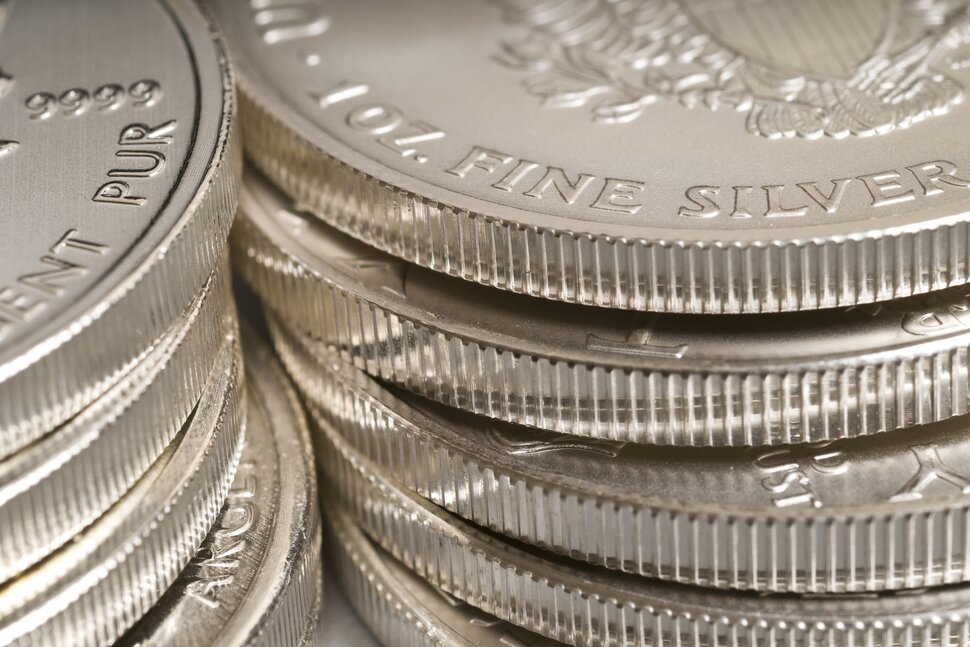
Investors can buy 99.9% pure silver bars ranging in weight from 1 ounce to 100 ounces or bullion coins such as the 1-ounce American Eagles the U.S. Mint produces.

Investors can also buy so-called junk silver coins. Prior to 1965, dimes, quarters and half-dollars issued by the U.S. Mint contained large quantities of silver. While many of the coins have no collectible appeal, they maintain value tied to their silver content.

Any investor buying silver bullion should be sure to use reputable, well-established metals or coin dealers, such as JM Bullion, APMEX and SD Bullion.

But even the most reputable dealers will charge a premium over the spot price. And if you want to sell metal back to them, they’ll buy it at a discount. So you’ll have to factor those costs in when thinking about whether you’ll make a profit or not.

Also, keep in mind that paying for secure storage and insurance subtracts from any gains in the price of the investment.

“The drawback to purchasing physical silver is primarily the need to protect the investment,” Aversano says. “Consumers will often need to pay a monthly or annual fee to a depository to secure their metals, rather than self-storage.”

Silver Futures and Options

Investors can also buy silver futures, or exchange-traded contracts in which the buyer agrees to purchase a standardized quantity of silver at a predetermined price on a future delivery date.

Meanwhile, silver options holders have the right, but not the obligation, to buy or sell a certain quantity of the metal at a certain price during a specified window of time.

Keep in mind that investing in futures carries a steep learning curve that involves knowledge of leverage and the need to roll over contracts as they expire to avoid taking delivery of the metal.

You’ll also need to get special permission from your broker to trade futures.

Silver Mining Stocks

Investors can also buy shares of silver mining stocks. Some of the largest, most popular silver mining stocks include Fresnillo PLC (ticker: FNLPF), Coeur Mining Inc. (CDE) and Hecla Mining Co. (HL).

Silver miners can outperform the price of silver during times when silver is rising because they can use operating leverage to increase profits. But owning a company can introduce risks not associated with the market price of silver. Management can make bad decisions, or a mine might not pan out as expected. Mine accidents also happen in this risky industry.

Silver ETFs

To help cushion the risk of investing in single mining companies, investors can consider exchange-traded funds, or ETFs, that group mining companies together based on certain criteria.

The biggest of those traded in the U.S., based on total assets according to VettaFi’s ETF database, are the Global X Silver Miners ETF (SIL) and Amplify Junior Silver Miners ETF (SILJ).

But ETFs have management fees not associated with owning individual stocks, and because of the diversification, an ETF may not perform as well as a single miner that strikes it rich.

Also, silver ETFs aren’t limited to just miners. For example, the iShares Silver Trust (SLV) and abrdn Physical Silver Shares ETF (SIVR) invest in physical silver, and the Invesco DB Precious Metals Fund (DBP) invests in silver and gold futures contracts.

Silver ETNs

Exchange-traded notes, or ETNs, are debt instruments that operate like a hybrid between a stock and a bond, potentially tempering investor risk.

For example, UBS AG ETRACS Silver Shares Covered Call ETN (SLVO) is a silver ETN that tracks the price of silver and pays a monthly distribution to investors.

Silver Streaming Stocks

Investors can also buy shares of silver streaming or royalty companies that finance mining projects and receive a portion of the profits.

Wheaton Precious Metals Corp. (WPM) and Franco-Nevada Corp. (FNV) are among the most popular.

Silver IRAs 

Another way to invest in silver is through a silver IRA. These individual retirement accounts function similarly to a regular IRA except they allow investment in silver coins or bars.

These accounts are exempt from the higher collectible tax that governs other profitable transactions in precious metals.

Opportunity to Apply for Appointment to the Citizens Coinage Advisory Board

The U.S. Mint is seeking applicants for appointment as a member representing the interests of the general public.

The United States Mint is seeking applicants for appointment to the Citizens Coinage Advisory Committee (CCAC) as a member representing the interests of the general public. The deadline to email submissions is no later than 5 p.m. (ET) on Friday, October 18, 2024. The United States Mint will review all applications and forward recommendations to the Secretary of the Treasury for consideration.

The CCAC is composed of 11 members — one specially qualified in numismatic collection curation; one specially qualified in the medallic arts or sculpture; one specially qualified in American history; one specially qualified in numismatics; three individuals appointed to represent the interests of the general public; and four individuals recommended by the Leadership of both the United States House of Representatives and the United States Senate.

Members are appointed for a four-year term. No individual may be appointed to the CCAC while serving as an officer or employee of the Federal Government, and all applicants must be United States citizens. CCAC members are Special Government Employees and are, therefore, subject to various applicable conflict of interest laws and ethics regulations.

Individuals wishing to be considered for appointment to the CCAC should submit a resume or curriculum vitae along with a cover letter describing their reasons for seeking appointment and detailing their specific skills, talents, and experience by email to info@ccac.gov, Attn: Jennifer Warren. The deadline to email submissions is no later than 5 p.m. (ET) on Friday, October 18, 2024.

The United States Mint is interested in candidates who have demonstrated interest in and a commitment to actively participating in meetings and activities, and a demonstrated understanding of the role of the CCAC and the obligations of a Special Government Employee; possess a demonstrated desire for public service and have a history of honorable professional and personal conduct, as well as successful standing in their communities; and are free of professional, political, or financial interests that could negatively affect their ability to provide impartial advice.

About the CCAC

The CCAC was established by an Act of Congress in 2003. It advises the Secretary of the Treasury on theme or design proposals for circulating coinage, bullion coinage, Congressional Gold Medals, and other medals produced by the United States Mint. The CCAC also makes commemorative coin recommendations to the Secretary and advises on the events, persons, or places to be commemorated, the mintage levels, and proposed designs.

The CCAC is subject to the authority of the Secretary of the Treasury. The United States Mint is responsible for providing necessary and appropriate administrative support, technical services, and advice.

The CCAC submits an annual report to Congress and the Secretary of the Treasury, describing its activities and providing recommendations.

Visit the website for additional information about the Citizens Coinage Advisory Committee.

Declared Finest Known, 1794 Dollar is Now Graded CACG MS67 And Insured For $15 Million

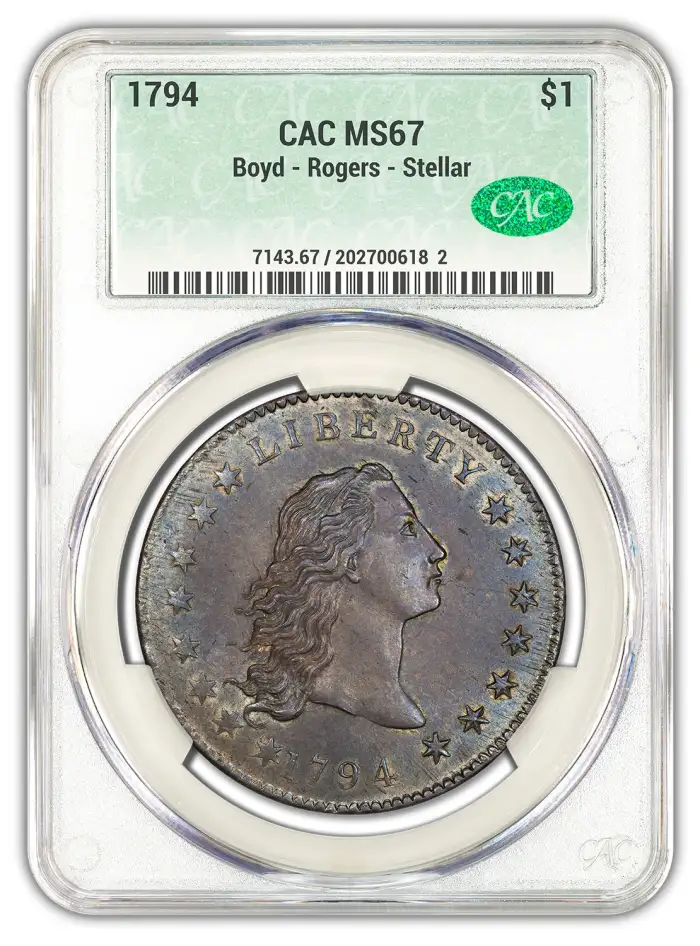
A 1794 Flowing Hair silver dollar, sold at auction “raw” as Gem Brilliant Uncirculated by Stack’s in 1995, has now been closely examined by experts at CAC Grading, who certified it as Mint State 67.

According to CACG, it is the finest known surviving example from the first year the United States Mint struck dollar coins for circulation. Now insured for $15 million by its long-time owner, the coin may make its first public appearance in 30 years in 2025.

In 2010, the coin was graded by PCGS as MS66+ and later given a CAC sticker of approval.

“I’ve been kicking myself ever since it received only a green CAC approval sticker rather than a gold sticker.I can certainly understand an eight-figure valuation in this market,” said Albanese.

Its pedigree dates back to the 1920s with famous collector Col. E.H.R. Green and later mid-century legendary type set collector Lelan Rogers. The 1794 dollar was purchased at the 1995 auction by dealer Jay Parrino for $577,500. Parrino and his partner Mike Phillips sold it in 1996 to dealer Chris Napolitano for his client, a collector in Georgia who still owns it and wants to remain anonymous under the set registry name “Stellar.”

“The Lelan Rogers 1794 dollar is the absolute best 1794 dollar; the best 1794 dollar in existence,” stated Phillips.

The coin was recently submitted to CAC for crossover, where a coin is removed from another third-party certification service’s sealed holder, examined, and, if appropriate, certified and encapsulated by another service.

Napolitano said his customer “was certainly happy about the results” and had expected CAC to grade the coin MS67.

“It validated what he felt about the dollar over all these years. Since I first saw this coin at Stack’s in 1995, I felt it was one of the most important U.S. coins in existence. In fact, at the time, I said that if I could own only one U.S. coin, this would be the one. That still holds true today,” Napolitano stated.

“My client has never publicly displayed the coin during the nearly 30 years he has owned it. We know there’s a whole generation of numismatists who have never had the opportunity to view the coin. In fact, many may not be aware of its existence at all. We don’t have any specific dates or venues to announce at this time, but we will discuss the possibility of displaying the coin in the future,” he revealed.

The 1995 Stack’s auction description of the coin stated:

“1794 Bolender 1. Gem Brilliant Uncirculated. 416.1 grains. A gorgeous toned satin gem coin. Both sides are toned a lovely, deep coin silver gray with iridescent champagne and palest iridescent blue around the rims. The fields are fully lustrous and satiny, the frost virtually unmarred by signs of handling. One has to wonder how such a big and heavy coin could have survived for 200 years with such satiny surfaces intact.”

According to U.S. Mint records, Chief Coiner Henry Voigt delivered a total of 1,758 silver dollars to Mint Director David Rittenhouse on October 15, 1794. That was the total mintage of 1794-dated Flowing Hair dollars released for the year.

“Less than 150 1794 silver dollars are known to exist today, and only a handful are certified mint state. The Lelan Rogers coin owned for decades by a Georgia collector and now graded CACG MS67 is the finest known,” said CAC Grading President Ron Drzewucki.

Several leading early American federal coinage experts, including Joe O’Connor, who spoke with CAC Grading about the coin, unanimously agreed.

“When we all first saw the Lelan Rogers 1794 dollar almost thirty years ago, it was clear then that this was not only one of the finest examples of the Flowing Hair Dollar type, but also likely the finest 1794. Three decades later, our collective opinion has not changed,” O’Connor declared.

Albanese and two dozen veteran numismatists founded the Certified Acceptance Corporation (CAC) in 2007 to provide buyers and sellers verification that their coins certified by third-party grading services met stringent standards. In 2022, he and Ron Drzewucki organized over 150 leading members of the numismatic community to expand their mission for accuracy and consistency by creating a new third-party grading and encapsulation service, CAC Grading, launched in 2023.

Did the Flowing Hair Dollars Sell Out?

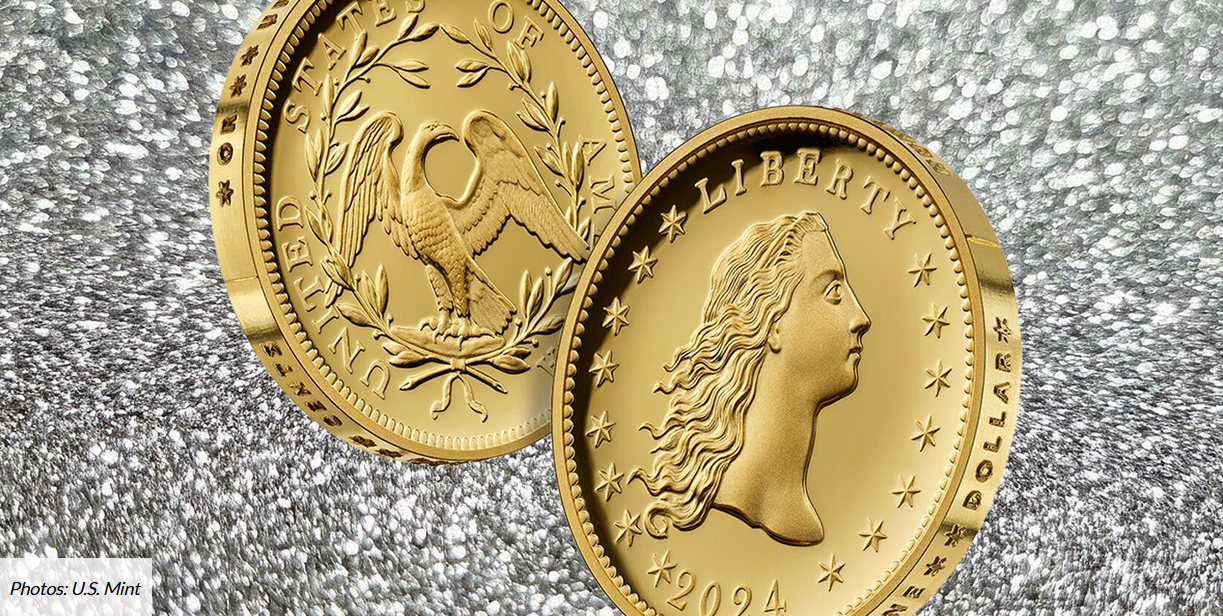
The Proof 2024 230th Anniversary Flowing Hair High-Relief gold dollar, launched on November 14, is arguably the most important coin the United States Mint has produced since the 2009 Ultra High-Relief gold double eagle ($20).

That is because of the 1794 dollar’s history and the impressive way the mint has re-imagined the piece with 21st-century technology. It is undoubtedly one of the finest designs of all time, rendered exquisitely in high relief. In addition, the coin is the first laser-engraved piece ever to be struck by the mint.

As anyone who tried to purchase one when they went on sale online knows, they sold out in just four minutes. Many veteran buyers thought it was unlikely that the coining facility would sell the entire mintage of 17,500 for this piece at almost $3,700 so quickly.

In the weeks since, conflicting information has circulated within the numismatic community regarding whether this piece sold out, its actual mintage, and whether the mint will offer any more coins.

In advance of the start of sales, the U.S. Mint told Coin World’s Paul Gilkes that it had struck the full authorized maximum mintage of 17,500. It turns out, however, that they actually did not produce that many.

U.S. Mint Says Coin Is Gone

On December 2, in response to an inquiry for this piece, Michael White at the United States Mint confirmed that the coin has indeed sold out. He explained that while the mint could strike as many as 17,500 of these gold coins, they decided not to exercise that option. Instead, they limited the coin to only 10,000, making it one of the lowest mintage gold coins in modern U.S. Mint history.

Mr. White could not elaborate on why mint officials made only 10,000 of these trendy coins, adding that it was unrelated to a shortage of gold coin planchets.

The 10,000 coins sold include 2,000 reserved for sale to companies in the mint’s Authorized Bulk Purchase Program (with actual sales of 1,994) and 7,941 that were sold online on November 14 or since then (typically early in the morning), according to an updated figure from the U.S. Mint that Coin News provided on November 19. 

The 7,941 figure includes 500 coins sold on November 14 at the Whitman Baltimore Expo. In addition, the first 230 coins struck that feature a “230” privy mark will be sold on December 12 during a Stacks-Bowers auction.

Thus, total sales are about 9,935, which will likely change as orders are reconciled.

Silver Medals

A similar situation occurred with the silver medal, which had the same design as the gold coin. The 49,996 medals were sold online, and 10,000 were reserved for bulk sales. The medal has an authorized mintage of 75,000, but it seems the Mint also opted to make less than that amount of these.

Collectors now know they must purchase gold coins on the secondary market if they want one.

Grinch coins to be available in time for the holiday

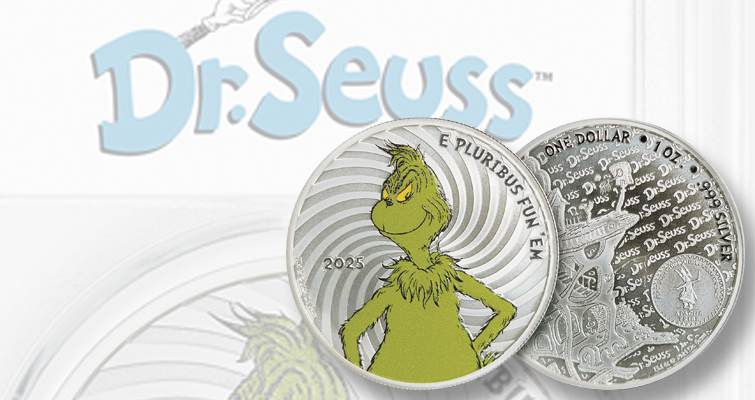
The first officially licensed Dr. Seuss coins depicting the famous green-colored Grinch from the popular book, How the Grinch Stole Christmas!, will be available starting on Friday, November 29.

While the day after Thanksgiving is commonly known as “Black Friday” for its holiday sales, this year the devious Grinch plans to “steal it” and make it “Green Friday” for the launch of his special, green-colorized coins.

The silver coins are 38.6 millimeters in diameter, slightly larger than U.S. silver dollars, and will be exclusively sold by Rare Collectibles TV.

“The Grinch is the first in a series of eight different limited edition legal tender coins depicting adored characters created by Pulitzer Prize-winning children’s books author Theodor Seuss Geisel. RCTV is delighted to be the exclusive distributor for these Dr. Seuss collectibles. It’s not just about collecting coins; it’s about collecting memories, too,” said Jack McNamara, co-founder of Rare Collectibles TV.

Mintage of the one-ounce .999 fine silver Grinch coins will be limited to 5,000, and each is being certified by Professional Coin Grading Service and encapsulated with specially created Dr. Seuss insert labels.

“RCTV’s goal is to keep the mintage figure incredibly low so collectors will own something truly special and rare,” adds McNamara. “Hopefully, Dr. Seuss fans will buy one for their kids, grandkids and maybe even their great-grandkids.”

For the first time since its founding in 1993, Dr. Seuss Enterprises has approved depicting the images of famous characters created by Theodor Seuss Geisel on legal tender collector coins. Geisel (1904-1991) published his first Dr. Seuss children’s book in 1937. He subsequently authored and illustrated more than 60 books, and over 600 million copies have been sold, according to Dr. Seuss Enterprises.

“Royalties paid for the use of the Dr. Seuss characters on the commemorative coins will help Dr. Seuss Enterprises benefit charitable organizations that focus on causes such as education, health, animal conservation, and the arts,” explained McNamara.

The book How the Grinch Stole Christmas! was first published in 1957 and the story has been adapted as television programs and theatrical films.

The obverse of the 2025-dated Grinch coins depict a green-colorized image of the furry Grinch with the humorous motto, “E PLURIBUS FUN ‘EM.” The reverse depicts the house illustration from the book, Oh, The Places You’ll Go!, and will be a common image used on all of the initial, collectible Dr. Seuss coins. The words “Dr. Seuss” are repeated in the background and “ONE DOLLAR 1 OZ .999 SILVER” are along the top and right rim.

A privy mark featuring the emblem from the Fort Sill, Chiricahua, and Warm Springs Apache Tribe is also on the reverse. The Native Americans tribe now based in Oklahoma is the sovereign entity issuing the Dr. Seuss coins that are being struck in the United Kingdom by The Commonwealth Mint & Philatelic Bureau.

Each coin will be accompanied by its own unique certificate of authenticity puzzle piece that when pieced together with the other COAs from each coin in this series will create an image of one of everyone’s favorite Dr. Seuss characters.

“Individual coins will be available while supplies last. We have also launched a Dr. Seuss Coin Club where members can automatically receive each of the eight classic Dr. Seuss character coins, such as The Cat in the Hat, one every other month. In addition, club members can automatically receive a ninth ‘mystery bonus’ character coin as a free bonus gift that will only be available to club members,” explained McNamara. “It is entirely possible that this ninth ‘mystery coin’ could become the rarest one of this first-time ever, limited-edition release.”

Working dogs to be recognized on commemorative coins

Congressional approval has been given for a commemorative coin program to recognize the critical contributions of working dogs in American society. The Senate passed S. 711, The Working Dog Commemorative Coin Act, on Nov. 19. The House of Representatives had passed their measure, H.R. 807, earlier this year. If signed by the president, the enactment would call for the creation of the coins in 2027. The measure was sent to the White House on Nov. 21.

All surcharges from the bill will go to America’s VetDogs to ensure that the organization can continue to provide these lifesaving animals to veterans and first responders with disabilities at no cost to the individual.

“Working dogs help our nation’s active-duty service members, veterans, and first-responders recover from injury, enhance their independence, and improve their lives,” said Senator Ted Budd, who introduced the measure in the Senate on March 8, 2023. “I commend the Senate and House for passing our bipartisan bill. This commemorative coin will honor the service of working dogs and provide funding to raise more service dogs for America’s heroes. I’m proud to lead this effort to give back to those who serve our country.”

“Working dogs are deeply embedded in our daily lives here on Capitol Hill and in those of countless veterans, active-duty military personnel, and law enforcement officers across the nation,” added Representative Patrick McHenry, who introduced the measure in the House on February 2, 2023. “I thank the America’s VetDogs team for their work to get this bill passed. Without the leadership of Senator Budd and the bipartisan collaboration from our colleagues across the aisle, this would not have been possible. The Working Dog Commemorative Coin Act is more than just a coin bill, it’s about improving the quality of life of our wounded veterans and first responders and honoring the service dogs who make that possible—something we all can get behind.”

“This legislation reflects what we can achieve together for a common cause,” said John Miller, CEO of America’s VetDogs.  “Each coin purchased will empower veterans and first responders to regain their independence, resilience, and quality of life. We are grateful to Senators Budd, Tillis, Kelly, and Duckworth, as well as Leader Schumer and Senator Gillibrand from our home state, for their leadership and bipartisan support.”

Under the terms of the measure, the Secretary of the Treasury would require the minting and issuance of not more than 50,000 gold $5 coins, along with not more than 500,000 $1 silver coins and not more than 750,000 clad half dollars. The measure calls for all products to be issued by one mint. The standard surcharges of $35 per gold coin, $10 per silver coin and $5 per clad coin would be added. The measure states all surcharges would be paid to America’s VetDogs for application to general expenses associated with the fulfillment of the mission of America’s VetDogs, including costs associated with personnel for training, dog care and consumer needs and other expenses in implementing the program.

For more than 20 years, America’s VetDogs has trained and placed guide and service dogs to provide independence, enhanced mobility, and companionship to veterans with disabilities from all eras. In 2015, VetDogs opened its programs to first responders, including fire, police, and emergency medical personnel. America’s VetDogs is a 501(c)(3) not-for-profit organization founded by the Guide Dog Foundation and serves clients from across the United States. More information can be found at www.VetDogs.org.

Rare coin found in piece of furniture sells for $2.52M at auction

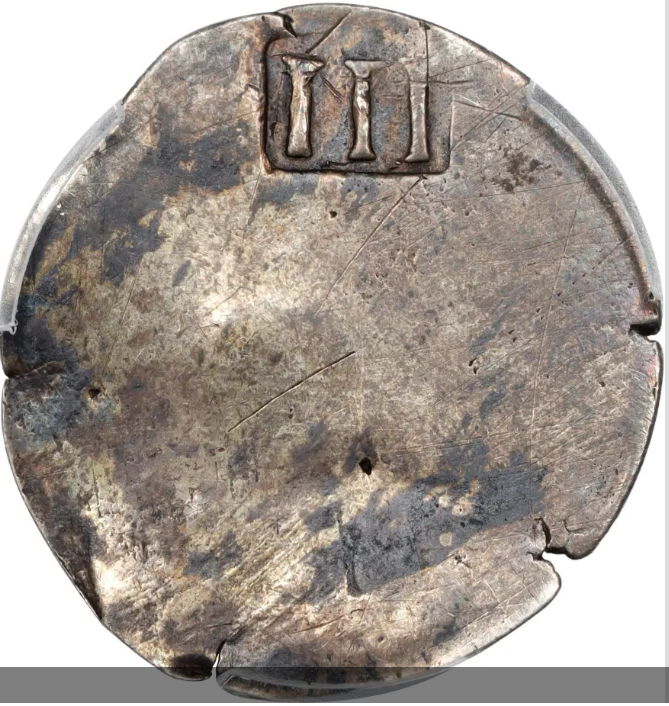
A rare 17th Century coin sold at auction for a record-breaking $2.52 million eight years after it was found in an old cabinet in Amsterdam.

The 1652 New England threepence, which is about the size of a nickel, was struck in Boston and found over three centuries later, inside an old cabinet in Amsterdam around 2016, according to a news release Monday from Stack’s Bowers Galleries, which handled the auction. The owner had no idea how valuable the discovery was for several years until he decided to thoroughly research the small, worn disk with three Roman numerals on one side and “NE” on the other.

Weighing just 1.1 grams, the value in silver was just $1.03 as of Monday’s market, but its rarity and rich history raised the price to a new record for any non-gold U.S. coin struck before the founding of the United States Mint, according to the gallery. The previous record was $646,250.

The threepence coin is thought to have come from the politically powerful Quincy family of Boston, which included the first lady of the United States, Abigail Adams, wife of President John Adams. Before serving as the second president of the United States, John Adams was also the fledgling country’s first ambassador to The Netherlands.

New England threepence coins are exceedingly rare – the only other known example has been in the care of the Massachusetts Historical Society for 120 years.

“This is one of the most important coins in all of American numismatics,” Professional Coin Grading Service President Stephanie Sabin told Coin World. “Since before the Civil War, collectors have regarded the 1652 New England threepence as the single-rarest American colonial coin. And for more than a century it’s been known as entirely unobtainable for private collectors.

The bidding war for the coin, which reached a price three times higher than initial projections, was “an exhilarating ride,” according to auctioneer Ben Orooji, who called the 12-minute contest “a career highlight.”

Back to Top
Product has been added to your cart