
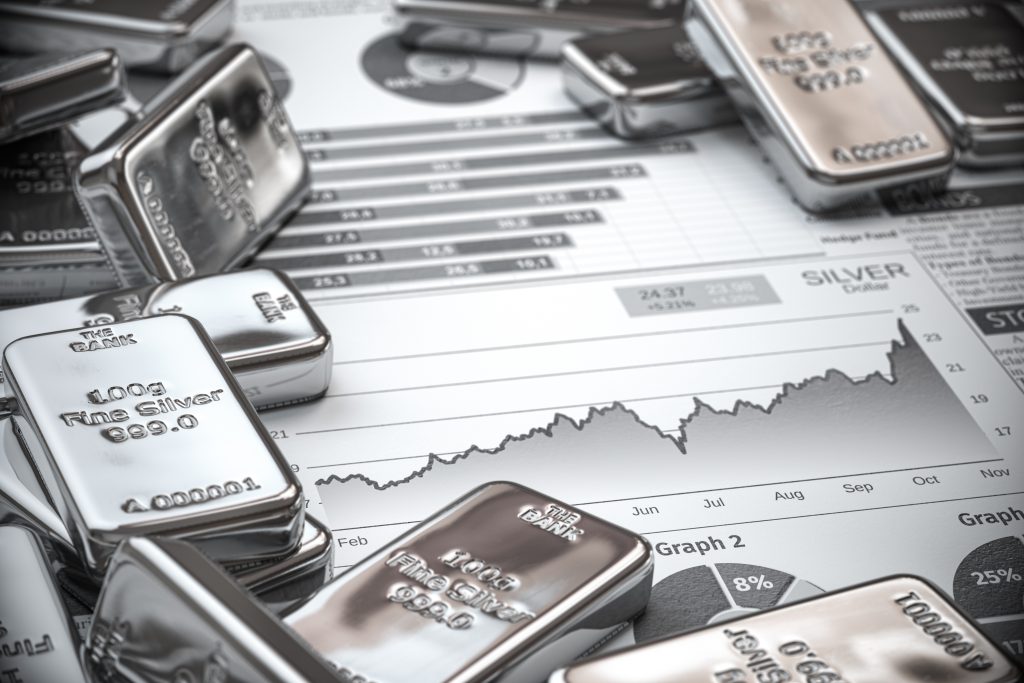
In the past year, silver has broken out in a powerful way. After years of languishing relative to gold, silver’s price climbed sharply in 2025 and early 2026, with benchmarks hitting record levels above $80–$86 an ounce amid surging industrial demand and safe-haven buying. This performance has slashed the long-neglected gold-to-silver ratio — the number of silver ounces it takes to equal one ounce of gold — from extreme highs seen earlier in the decade toward levels not seen in years.
Why Silver is on the Move Now
Silver’s rally isn’t just about investor psychology — it’s rooted in real, structural demand:
🔹 Industrial Growth is Exploding
More than half of global silver demand now comes from industry — especially solar panels, electric vehicles, electronics and data-center infrastructure. Solar alone consumes hundreds of millions of ounces annually, and that demand is rising rapidly as the world transitions to clean energy. (AInvest)
🔹 Persistent Supply Tightness
For several consecutive years the silver market has run a structural deficit, meaning demand has outpaced supply. Above-ground stocks have dropped, and mining output has struggled to rise fast enough.
🔹 Macro Drivers Amplify the Move
Expectations for lower interest rates, geopolitical uncertainty and weaker currencies have pushed investors into hard assets. Silver’s dual role as a macro hedge and an industrial metal gives it leverage that pure precious metals like gold don’t always enjoy as intensely. (AInvest)
The result? Silver’s price has outpaced gold in recent rallies, compressing the gold-silver ratio and attracting fresh attention from traders and long-term investors alike.
What Could Happen by 2027: A 1:5 or 1:10 Ratio?
To visualize a 1:5 or even 1:10 gold-to-silver price relationship, imagine gold trading at $5,000 per ounce — a level some strategists have flagged — and silver sitting at $500–$1,000. Pulling off such a dramatic compression would be historic, and not impossible in theory, but it would require several reinforcing conditions:
1. Continued Structural Shortages
If silver deficits persist and inventories tighten further, industrial buyers and investors may bid prices much higher.
2. Persistent Macro Tailwinds
Weaker global monetary conditions, sustained inflation expectations, and prolonged safe-haven demand could amplify price moves in silver beyond typical precious metal behavior.
3. Re-rating by Markets
The gold-silver ratio has historically gravitated toward its long-term averages (often roughly 50–70:1), and broad market participants may start pricing silver more aggressively relative to gold if they view its industrial role as dominant. (Reddit)
However, even in a strong bull market, reaching a 1:5 ratio (e.g., silver at one-fifth the price of gold) would likely require extreme market conditions — akin to those seen in commodity supercycles or systemic monetary stress. A 1:10 ratio is easier to imagine than 1:5, because it still implies silver at only 10 % of gold’s price, which is closer to historical cycles of strong silver out performance.
Bullish Scenario: What Pushes Silver Higher
✔ Solar & EV Expansion
Doubling renewable energy capacity and EV production by 2027 would soak up more silver than currently imagined.
✔ Low Real Interest Rates
Persistently low or negative real yields would make non-yielding assets like silver attractive relative to bonds and cash.
✔ Investor Flavor Shifts
As markets reprice risk and uncertainty, silver’s volatility — once a deterrent — may become a feature that draws strategic allocations from hedge funds, sovereign wealth funds and ETF inflows.
What Could Temper the Rally
It’s worth noting silver can be volatile. Market swings — caused by shifts in monetary policy, short-term profit taking, or changes in ETF inventory flows — routinely punctuate long-term trends. And unlike gold, silver’s widespread industrial use means its price also tracks manufacturing cycles. (Business Insider)
The Bottom Line
Silver’s bull run is more than a headline — it’s grounded in structural demand, tight supply and macro drivers. While a 1:5 gold-to-silver ratio by 2027 would require extraordinary and sustained market forces, continued compression of the gold-silver ratio is plausible, especially if industrial demand keeps outpacing supply and safe-haven flows persist. Whether silver reaches triple-digit prices or fundamentally rewrites historical pricing relationships, its story for the next two years is shaping up to be one of the most compelling in commodities markets.
Note: This article is informational and not financial advice; precious metals and markets carry risk.